Notes · 28 October 2026 · 2 min read
3D render or photoshoot: which do you choose when?
When is a 3D render better than a product photo, and vice versa? On products that do not exist yet, variants, trade show stands and authenticity.

There are two ways to show a product: photograph it or render it in 3D. Both can look clean and professional, but they solve different problems. Which do you choose when?
Choose 3D when the product does not exist yet
The clearest case: you want to show a product that is still in development, or of which no finished unit exists yet. With a 3D render you can already communicate, start a crowdfunding campaign or fill a webshop before production begins.
Choose 3D for many variants
Do you have the same product in ten colours or finishes? For a photoshoot you would have to make and photograph all ten. In 3D you build the model once and swap materials and colours. All images also stay perfectly identical in angle and light.
Choose 3D for what a camera cannot do
Packaging that unfolds, a product that comes apart into its components, a cross-section of what is inside, or a camera that flies through a space.
Choose 3D for a space that does not exist yet
A trade show stand, shop or interior can also be shown in 3D in advance, to make decisions or to announce the stand early. For FoxPeak we designed the trade show stand and showed it in renders beforehand. More on the whole run-up to a trade show: trade show stand and trade show content.
Choose a photoshoot for authenticity and context
Photography shows a real product, in real light, often with people and a real setting. For food, fashion, interiors and anything where texture and feel matter, a photo usually comes across as more credible. And if the product already exists and there are few variants, a photoshoot is usually faster and cheaper than a good 3D model.
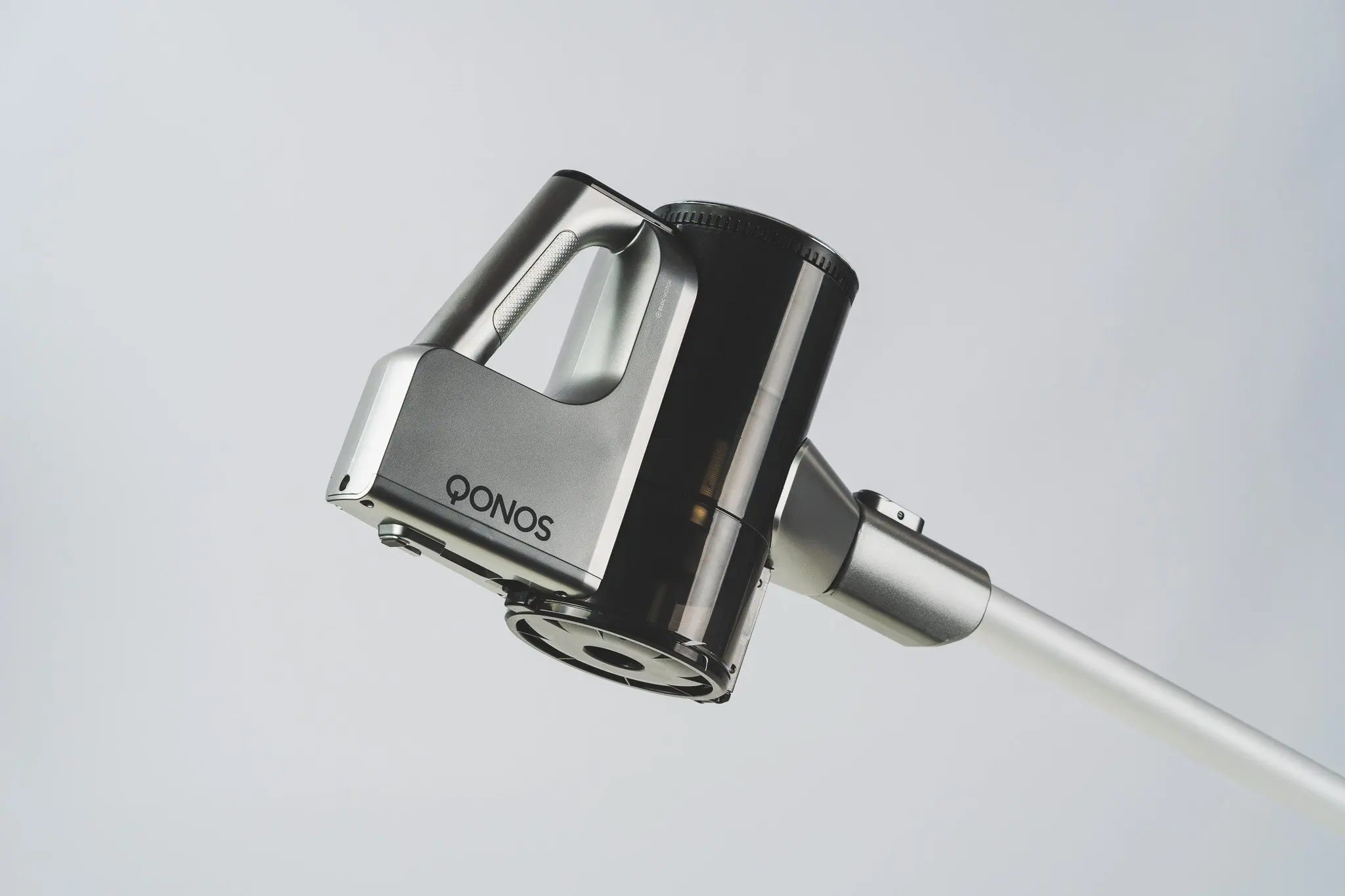
For Qonos we photographed the full range in the studio: product shots and details.
Or both
A combination is often the strongest: packshots and variants in 3D, mood and use in photo or film. What matters most then is that both look the same: the same light, the same colours, the same style. Plan that together from the start.
What do you need for 3D?
A 3D model gets better as the information gets better: technical drawings or CAD files, exact colour codes, material samples or a prototype. The more complete, the fewer corrections afterwards.
Torn between 3D and a shoot? See what we do in 3D and motion and product photography, or tell us about your product.