Notes · 16 November 2026 · 3 min read
Trade show stand and trade show content: what to produce before, during and after the show
From stand visualisation and panels to photos and clips on the show floor. What to produce for a trade show, and in what order to plan it.

At a trade show you have a few seconds. A visitor walks down the aisle, glances to the side and decides whether to stop. What they see at that moment is your walls and your screen. You don’t make those the week before. Below is what to produce, and when.
One idea per wall
Nobody reads a panel from top to bottom. A stand works when each wall says one thing and the walls together form a sequence.
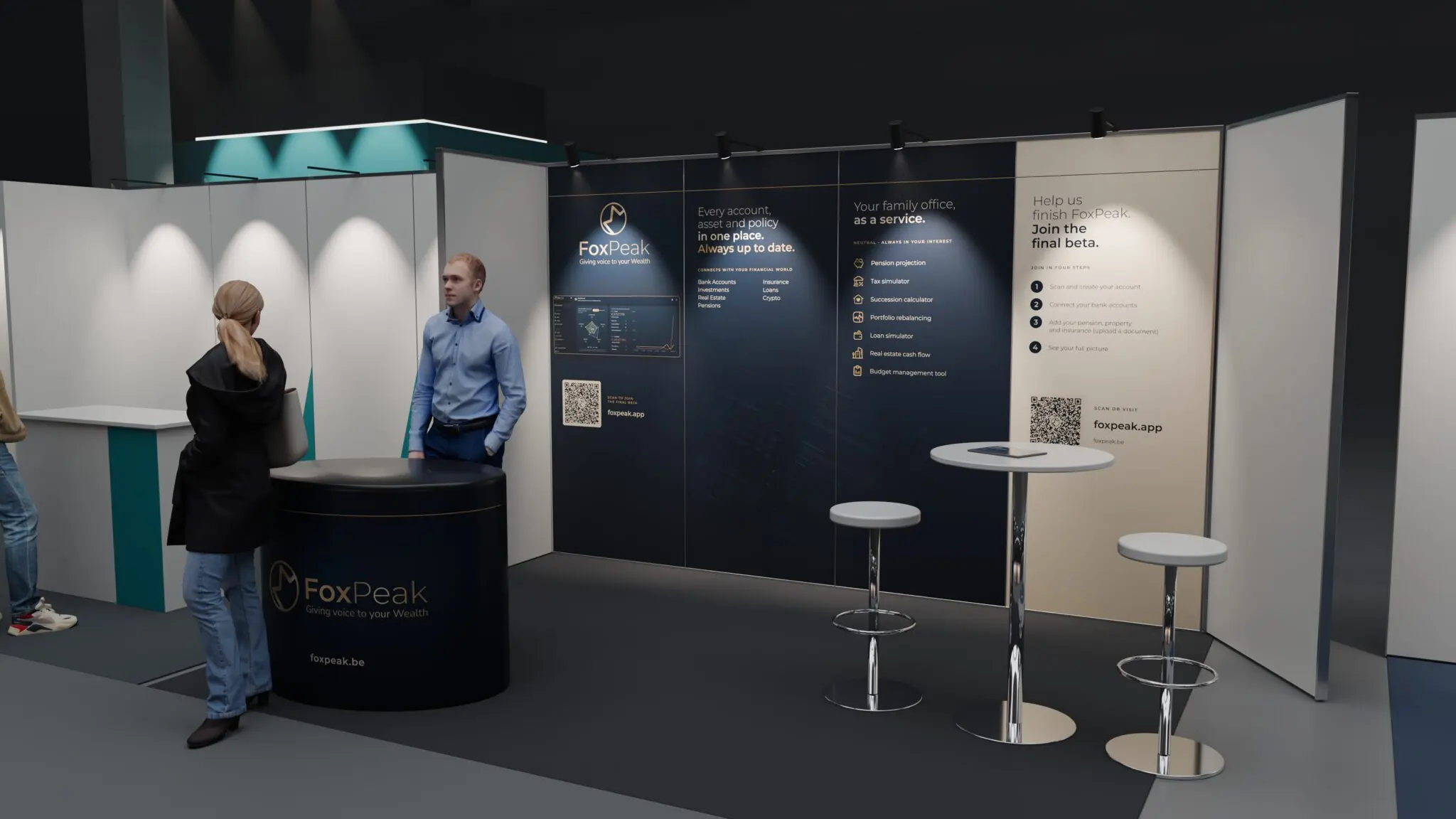
For FoxPeak we designed four wall panels as a single walking line: who the platform is, what it does, who it is for and what you can do now. The counter wrap only repeats the brand. That way the stand stays recognisable from a distance and readable up close.
So write out that sequence first, in plain sentences. Design comes after.
See the stand before it is built
A 3D visualisation shows the stand at true scale, with people in it. You see straight away whether a title hangs too low, whether the screen disappears behind the counter and whether the wall facing the aisle says enough. A decision on screen costs an adjustment. The same decision on the show floor costs new print work.
We showed the FoxPeak stand in renders beforehand. You can also use a render like that to announce your participation. Read more about what is possible under 3D and motion.
Panels are print work with their own rules
Ask your stand builder for the exact size of each panel, the visible zone and the position of seams, doors, power sockets and furniture. Anything lower than a table disappears behind people. So put your message high.
Check your photos early too. An image that works for your website is rarely large enough for a wall several metres wide. If there is no suitable image, you are better off planning a shoot or a render first than blowing up a grainy photo afterwards. Which of the two fits, you can read in 3D render or photoshoot: when to choose which?
A screen on your stand: short, looped, no sound
A show floor is loud. Assume nobody hears your video. What works is a short loop with one idea and large text that can be read from the aisle. No opening you have to wait for, no ending you have to sit through.
Ask for the format and orientation of the screen in advance. A screen mounted upright needs a different edit from a wide screen. If you already have a company film, a stand version is often a new edit of existing footage with titles added.
During the show: capture what you built
A stand exists for a few days. After that, only the images remain. So plan three kinds of footage:
- The empty stand, before the doors open. That is the image for your website and for next year’s briefing.
- The stand in use: conversations, demonstrations, your team at work.
- Short vertical clips that go online during the show itself, so people who haven’t come yet know where to find you.
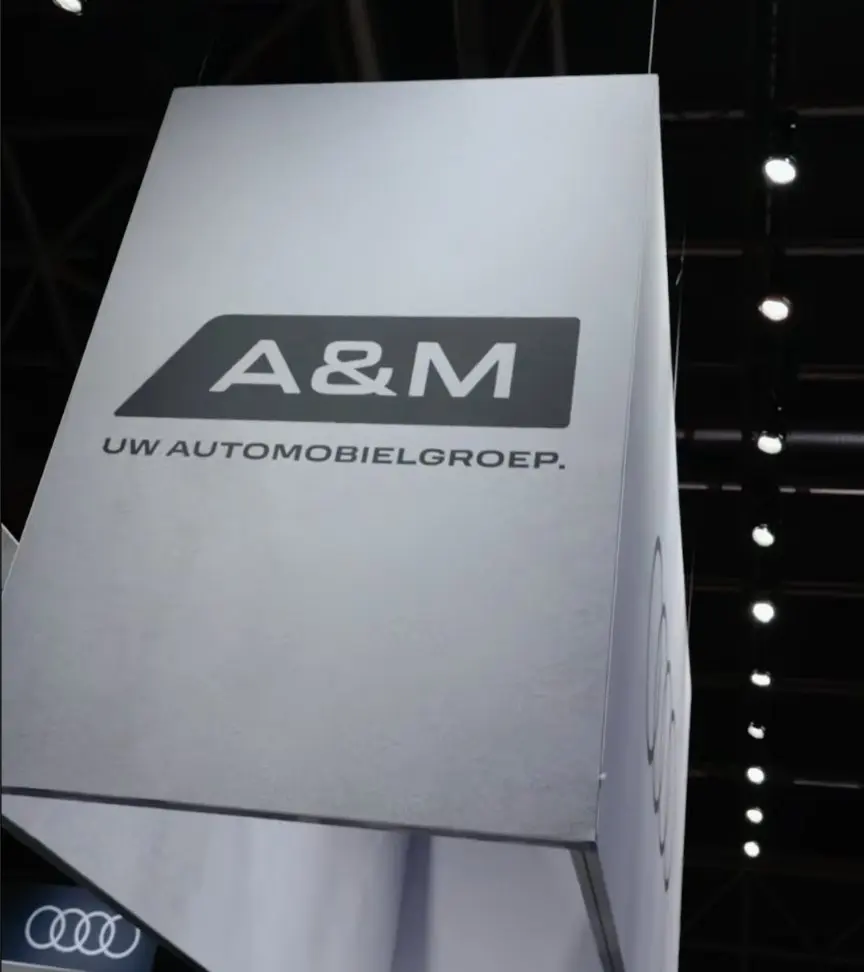
That is how we shot three vertical reels for A&M at the lifestyle fair Trés Chic, one per brand: BMW, Audi and Range Rover. Give the photographer or filmmaker a list in advance of the products, people and moments that must be captured. On a busy show day there is no time to work that out on site. What else belongs on such a list is in the event photography checklist.
If the show also includes a conference or a programme with speakers, read Filming a conference or summit.
After the show
The images keep working in your follow-up: the email to people who visited, a post on LinkedIn, the internal report that justifies taking part. And they are the starting point for next year’s stand. You see what worked and what got in the way.
Count back from the delivery date
The strictest deadline is the one for print, not the opening day. Ask your stand builder for the artwork delivery date and count back from there: first the message, then design and visualisation, then print-ready files. The video for the screen and the planning of the shoot can follow later. The panels can’t.
Exhibiting at a trade show soon? Tell us which show and how big your stand is. Then we will look together at what you need and what has to come first.